
Halloween Is Serious Business — and a Force for Good — on the Central Coast
Goodwill's biggest retail season is also one of the Salinas Valley's quietest engines for jobs, savings and sustainability.
For most retailers, Halloween is a seasonal bump. For Goodwill, it is the single biggest retail season of the year — and here on the Central Coast, it has become one of the most powerful engines we have for putting people back to work.
Consider the scale. Americans are expected to spend roughly $13.1 billion on Halloween in 2025, according to the National Retail Federation, up from about $7.4 billion a decade ago. Nearly three in four people plan to celebrate, and the average shopper will spend more than $100 on costumes, candy and decor. A great deal of that money flows to seasonal pop-up stores selling bagged, single-use costumes — worn once, then sent to the landfill by November 1.
There is a smarter model hiding in plain sight, and it happens to be a nonprofit. At Goodwill Central Coast, Halloween has become a case study in how value, creativity, sustainability and social impact can reinforce one another rather than compete.
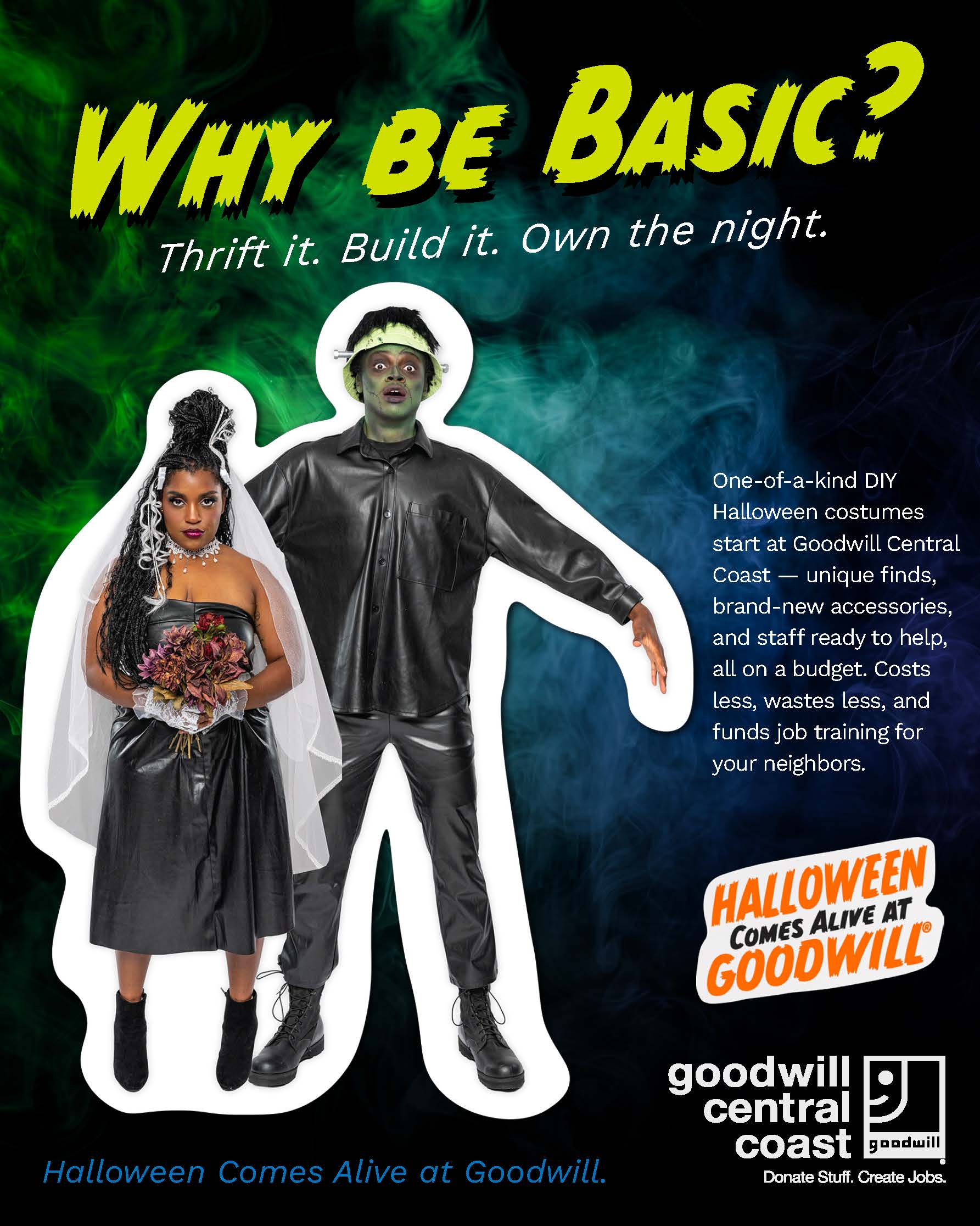
Start with the economics. A new costume from a seasonal store can easily run $50 to $100. A thrifted costume — a flannel shirt and straw hat for a scarecrow, a trench coat and fedora for a film-noir detective, a vintage band tee and leather jacket for a rock star — often costs a fraction of that. In a season when many shoppers say they expect to pay more than last year, affordability is not a nicety; it is the whole ballgame. Our model turns the same dollar into a better costume and a smaller bill.
Then there is creativity, and this is where thrift genuinely outperforms conventional retail. A national Goodwill survey found that 62 percent of costume do-it-yourselfers turn to thrift stores for their looks, and among those who make their own costumes, 84 percent prefer Goodwill. Younger shoppers in particular have made secondhand a lifestyle: roughly 80 percent of young consumers say thrifting helps them create outfits no one else has, and three in four believe a secondhand look can be more stylish than something new. Our racks change daily, which makes every visit a treasure hunt and every costume one of a kind.
But the reason Halloween matters most to us has little to do with costumes. It is what the season funds.
Every purchase at a Goodwill Central Coast store generates revenue that pays for job training, career services and employment programs across Monterey, Santa Cruz and San Luis Obispo counties. Behind those numbers are real people: someone rebuilding after incarceration, a young adult aging out of foster care, a veteran finding footing in civilian life. Our founder, Edgar J. Helms, built this organization on a simple conviction more than a century ago — that meaningful work restores dignity, confidence and independence. That is still the return on every Halloween dollar spent with us.
For the business community, there is a sustainability story here as well. Reuse is the original circular economy. Every costume assembled from donated clothing is a set of materials kept in productive use and out of the waste stream — no new manufacturing, no packaging, no landfill. As more Central Coast companies set sustainability goals and look for authentic ways to meet them, thrift represents one of the few consumer behaviors that is cheaper, greener and more community-minded all at once. It is rare for the frugal choice and the responsible choice to be the same choice. At Goodwill, they are.
That alignment is why we lean into Halloween each year. It is a moment when the fun thing, the affordable thing, the sustainable thing and the generous thing all point in the same direction — toward a local store, and toward a neighbor who needs work.
There are easy ways for local employers to take part. Encourage teams to thrift their office costumes and host a friendly contest. Clean out storerooms and closets and donate gently used clothing, decor and household goods; the proceeds go straight back into workforce programs. And when the season ends, donate those costumes back so the cycle can begin again next October.
Halloween will come and go, but the work it funds continues year-round. This season, before heading to a pop-up shop, consider what that same spending could do a little closer to home. A costume that costs less, wastes less and helps a neighbor find a job is not just a good deal. It is an investment in the Salinas Valley itself.
To learn more about programs, donations and store locations, visit www.ccgoodwill.org.